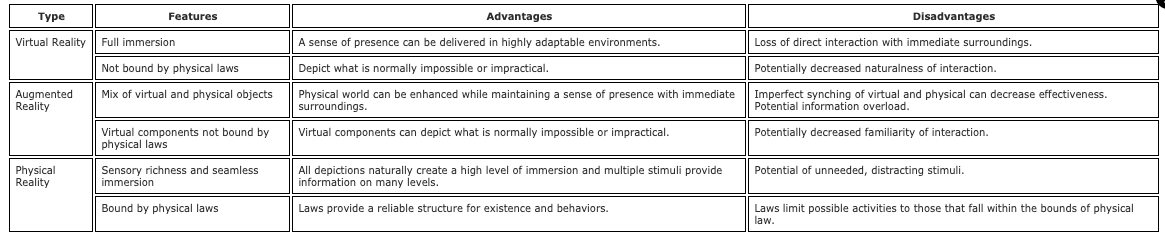
Introduction to Augmented Reality
Definitions
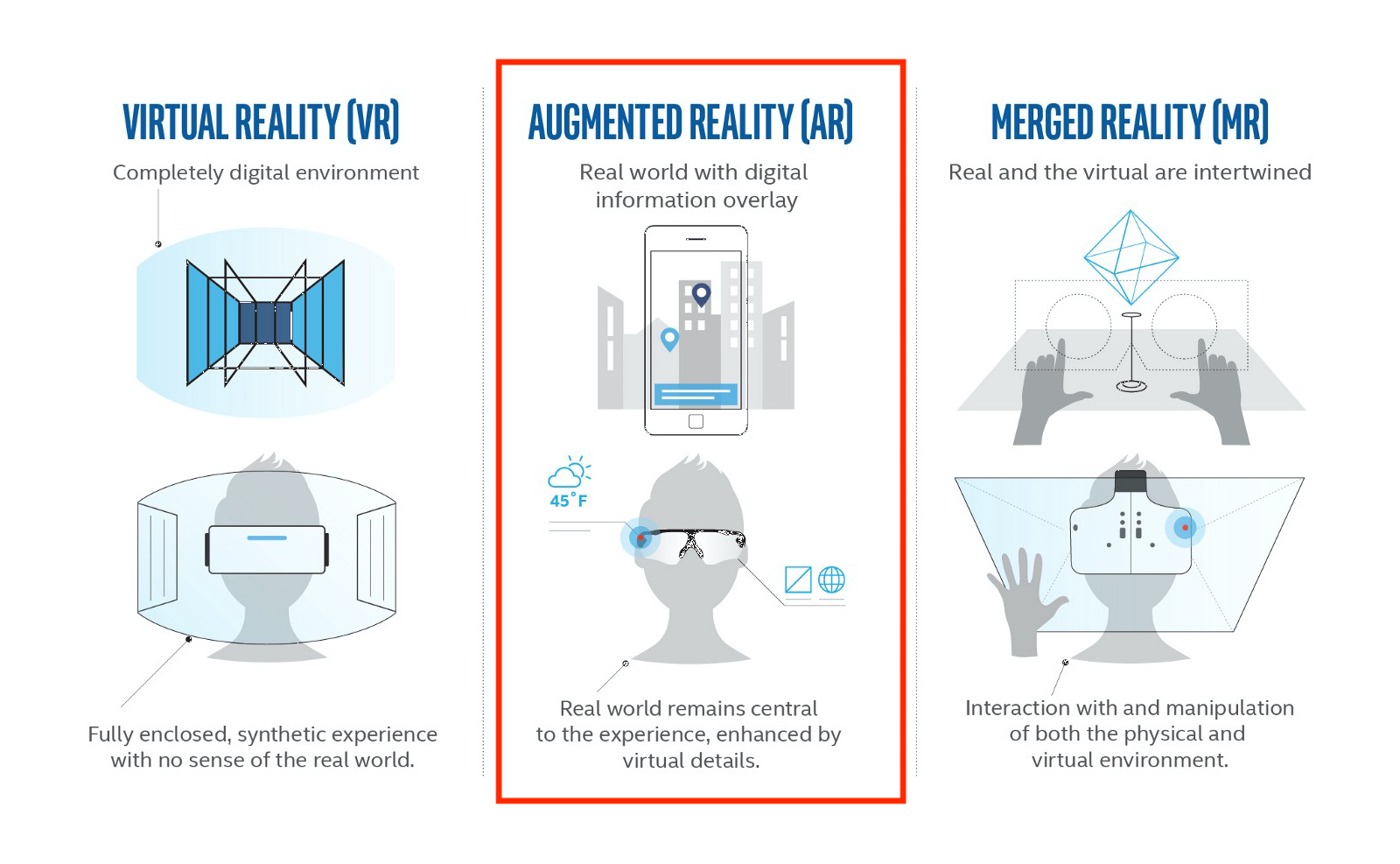
...adds digital elements to a live view often by using the camera on a smartphone.
...is an overlay of digitally created content onto the user’s real-world environment.
...is an experience where designers enhance parts of users’ physical world with computer-generated input. Designers create inputs—ranging from sound to video, to graphics to GPS overlays and more—in digital content which responds in real time to changes in the user’s environment, typically movement.
How it Works
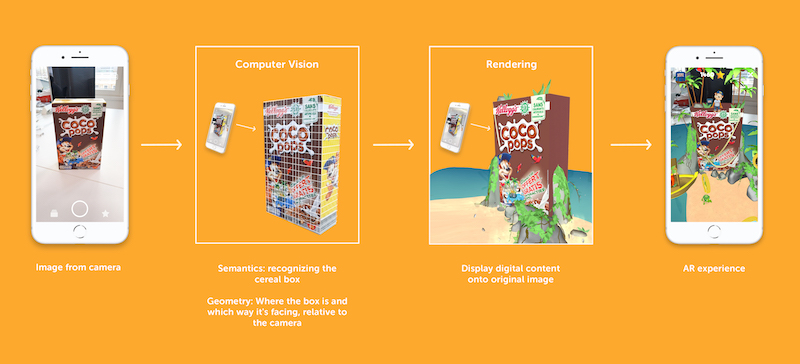
The History of AR
Here is a nice timeline of augmented reality technologies. Here is a nice presentation on the topic.
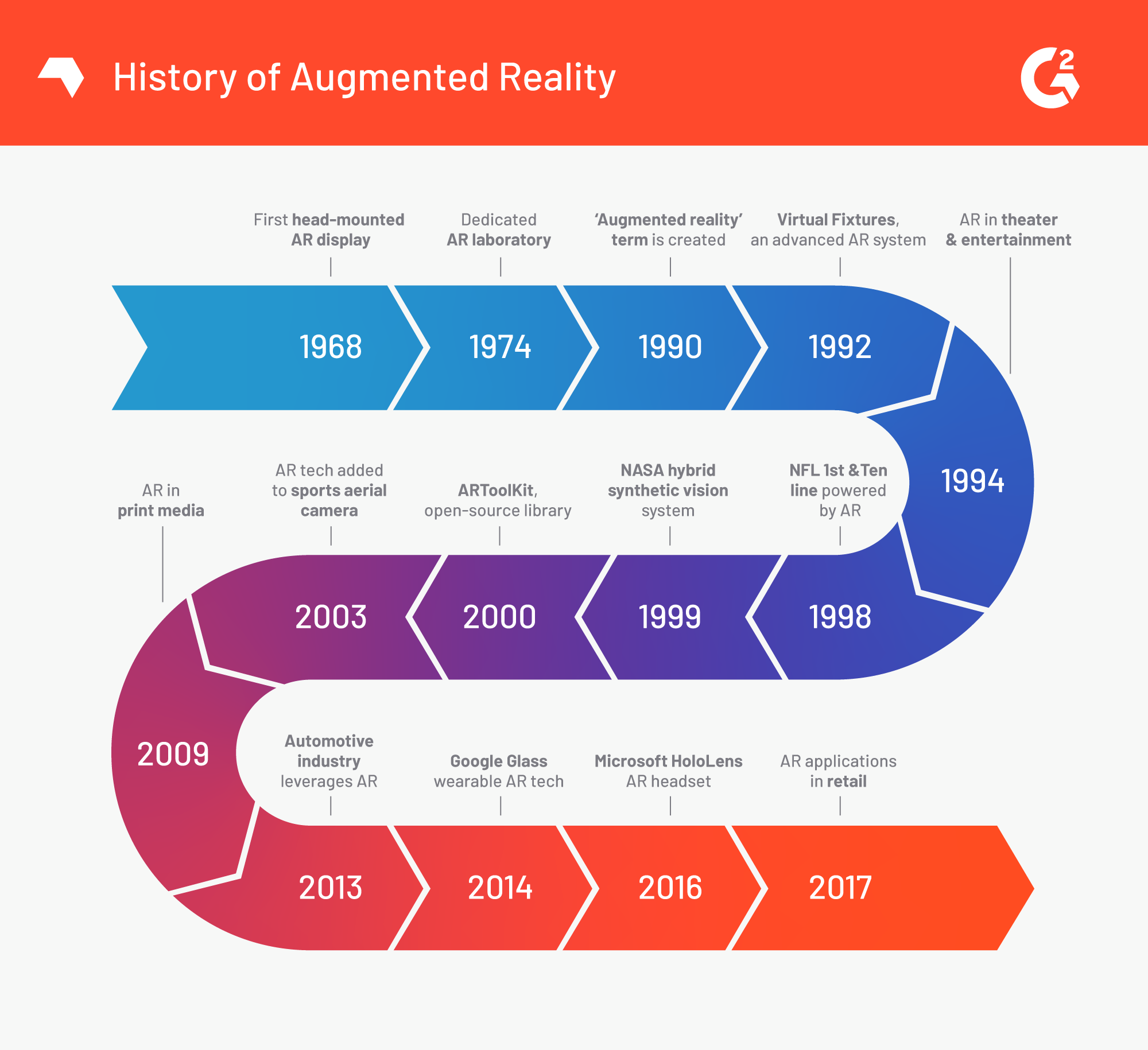
Sword of Damocles by Ivan Sutherland (1968)
the name for the mechanical tracking system and not the actual HMD, which was just called "the head-mounted display system", it is widely considered to be the first augmented reality head-mounted display (HMD) system
Haunted Mansion by Walt Disney (1969)
The most famous early examples of projection-based augmentation in Disney parks were the projected heads in the Haunted Mansion. These projections include Madame Leota, the ghostly head appearing inside a crystal ball in the séance scene, and the quintet of singing busts from the graveyard scene.
The most famous early examples of projection-based augmentation in Disney parks were the projected heads in the Haunted Mansion. These projections include Madame Leota, the ghostly head appearing inside a crystal ball in the séance scene, and the quintet of singing busts from the graveyard scene.
More projection mapping:
Videoplace by Myron Krueger (1974)
(open in YouTube, paste this in the console)
var videoElement = document.querySelector("video");
var audioCtx = new AudioContext();
var source = audioCtx.createMediaElementSource(videoElement);
var gainNode = audioCtx.createGain();
gainNode.gain.value = 2; // double the volume
source.connect(gainNode);
gainNode.connect(audioCtx.destination);
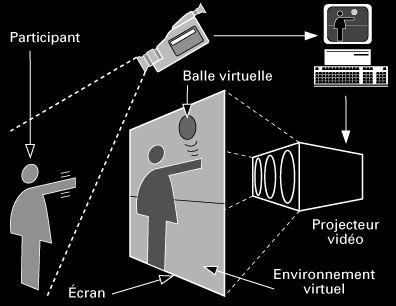
His idea with the Videoplace was the creation of an artificial reality that surrounded the users, and responded to their movements and actions, without being encumbered by the use of goggles or gloves.
He envisioned the art of interactivity, as opposed to art that happens to be interactive. That is, the idea that exploring the space of interactions between humans and computers was interesting. The focus was on the possibilities of interaction itself, rather than on an art project, which happens to have some response to the user.
Displacements by Michael Naimark (1980)
An immersive film installation... Two performers were filmed in the space using a 16mm motion picture camera on a slowly rotating turntable in the room’s center. After filming, the camera was replaced with a film loop projector and the entire contents of the room were spray-painted white.
RADAR System by Dan Reitan (1981)
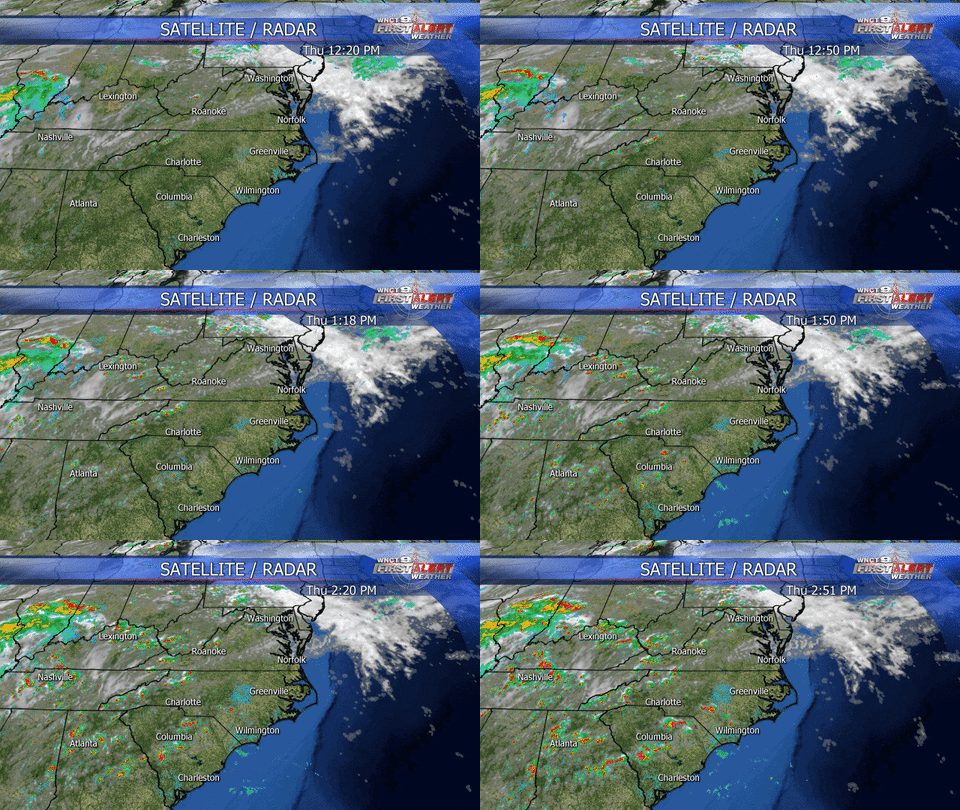
This technology was more than just an overlay, mixing real-time images from multiple radar systems and satellites simultaneously.
(vertabrae)
Virtual Fixtures by Louis Rosenberg (1992)
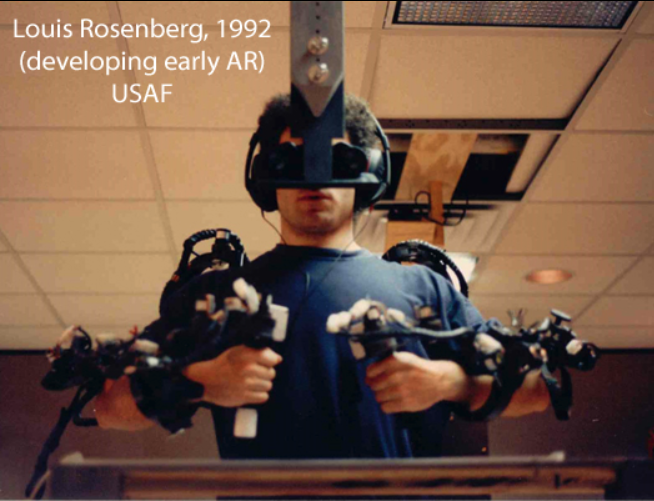
a pair of binocular magnifiers aligned so that the user’s view of the robot arms were brought forward so as to appear registered in the exact location of the user’s real physical arms. The result was a spatially-registered immersive experience in which the user moved his or her arms, while seeing robot arms in the place where his or her arms should be. The system also employed computer-generated virtual overlays in the form of simulated physical barriers, fields, and guides, designed to assist in the user while performing real physical tasks.
(historyofinformation)
Magic Yellow Line by Sportsvision Inc. (1998)
Sportsvision broadcasts the first live NFL game with the virtual 1st & Ten graphic system – aka the yellow yard marker.
Google Glass by Google (2013)
Hololens by Microsoft (2016)
Headsets w/Passthrough
Meta Quest Pro (2022)
Lynx R1 Mixed Reality (2022)
Vocabulary
- Computer Vision (CV)
- Spatial Anchors (shared)
- Image Tracking
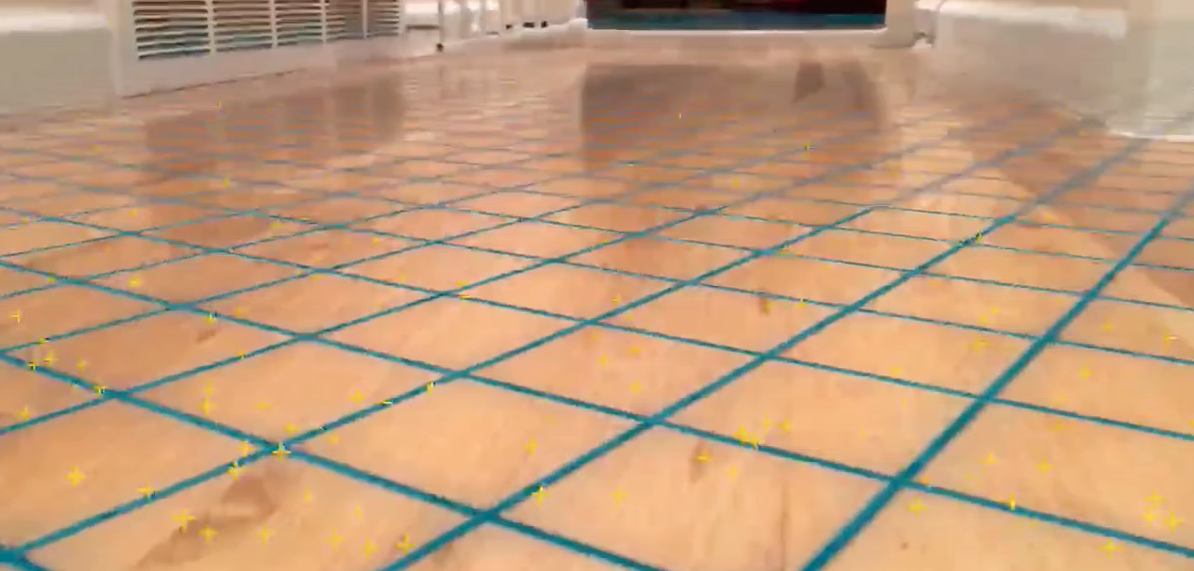
- Plane Tracking
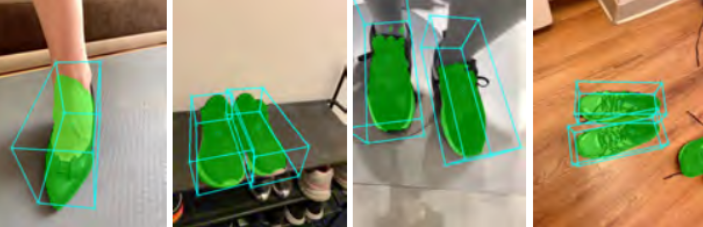
- Object Tracking
- LiDAR
- Point Cloud
- Spatial Mapping
- Occlusion

Types of AR
Marker-Based AR
Markerless AR
Location-Based AR
Projection-Based AR
Superimposition-Based AR
AR Development
Software Development Kits (SDKs)
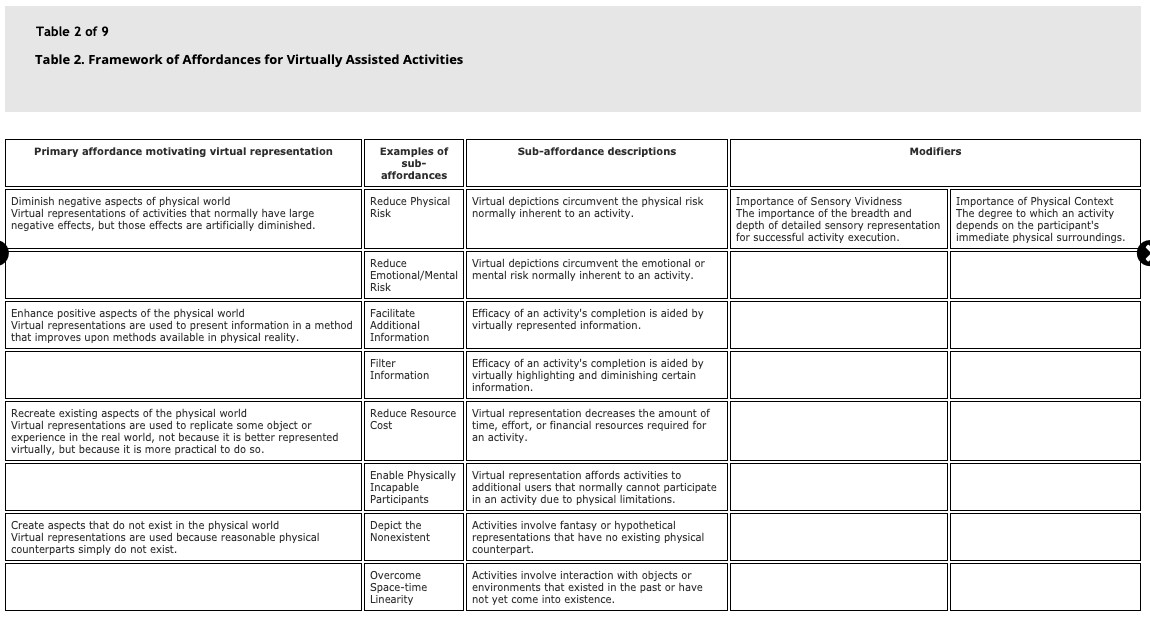
Affordances
Affordances